From Street Food to Superstar
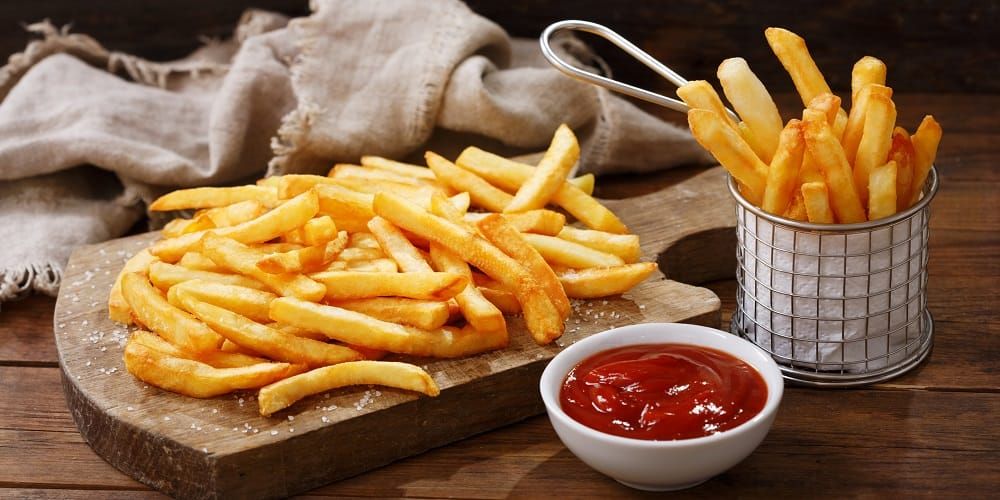
In a universal popularity contest, the French fry would be a strong candidate. Paired with a burger at a local pub, piled high at a baseball game, or nestled alongside a perfectly cooked steak at a fine restaurant, fries have become one of the world's most beloved foods.

The delicious history of the French fry
By Robert Matsumura, Active Media
In a universal popularity contest, the French fry would be a strong candidate. Paired with a burger at a local pub, piled high at a baseball game, or nestled alongside a perfectly cooked steak at a fine restaurant, fries have become one of the world's most beloved foods. However, despite their presence on menus across the globe, there’s more to the history of the French fry than many people realize — and even a bit of controversy to boot. The French fry’s very name is shrouded in mystery.
Did the French Fry even originate in France?
While the name “French fry” implies that the fry originated in France, a number of historians assert that the modern fry likely originated not in France, but in nearby Belgium.
Belgian tradition maintains that villagers living along the Meuse River in the late 1600s commonly fried small fish as a staple part of their diet. In wintertime, however, when rivers froze and fish became scarce, they reportedly cut potatoes into strips resembling fish and fried them up instead. Although documentary evidence to fully support the story is debated by historians, Belgium's claim to the fry cannot be dismissed.
Of course, the French have their own origin story. Historians point to documented records of street vendors selling fried potatoes in Paris by the late eighteenth century, particularly near the Pont Neuf, the city's oldest bridge. These vendors sold pommes frites — literally “fried potatoes” — to Parisians desiring an inexpensive yet delicious snack.
The truth may never be known for certain, but it’s clear that France and Belgium both helped lay the groundwork for what was to become one of the planet’s favorite foods.
How the Fry Got Its Name
Now, as to the name — If the fry possibly originated in Belgium, why do Americans call it a “French” fry? One popular explanation traces back to World War I. Apparently, American soldiers stationed in Belgium became fans of the fried potatoes sold by local vendors. As French was widely spoken in parts of Belgium, the soldiers reportedly referred to the snack as “French fries.”
Circulating as well is the linguistic explanation. In nineteenth-century English, the term “to french” sometimes referred to cutting food into thin strips. According to this theory, “French-fried potatoes” designated the preparation method rather than the nation of origin.
To this day, the debate still rages, but regardless of how the name developed, by the early twentieth century “French fries” had become firmly entrenched in the American vocabulary.
Thomas Jefferson: Early Ambassador of the French Fry
One of America's Founding Fathers may have played a small role in the rise of the French fry in this country. During his time as America's minister to France in the 1780s, Thomas Jefferson acquired a deep appreciation of French cuisine. Upon returning home, he introduced a variety of European culinary influences to American gastronomy.
Jefferson’s historic papers describe a recipe of potatoes served “in the French manner.” Although historians cannot definitively say that these were identical to today's fries, they suspect that they may have been a close relative. French cooking was a passion of Jefferson’s, and he helped introduce Americans to culinary ideas that eventually would become a part of everyday life. In truth, fries remained relatively uncommon for most of the nineteenth century. Their true rise to fame arrived in the twentieth century.
The Rise of an American Icon
It was during the twentieth century that the French fry shifted from obscure novelty into a national obsession. Spurred by advances in commercial food production, refrigeration, and transportation, potatoes became easier to distribute and prepare on a large scale. Restaurants, diners, and food vendors increasingly featured fries on their menus.
With the arrival of the automobile, the trend only accelerated. The popularity of road trips and drive-in restaurants created the perfect culinary environment for the French fry. Fries quickly became the perfect side dish: inexpensive, filling, easy to prepare, and universally appealing.
Then fast food arrived on the scene. Due to fast food chains such as McDonald's, the French fry became a standardized part of American food culture. Through carefully controlled preparation methods, restaurants were able to produce fries with consistent texture, flavor, and appearance. By the mid-twentieth century, burgers and fries had become inseparable. Today, billions of servings of fries are consumed annually across the globe.
Fries Around the World
The adaptability of the French fry is one of the keys to its popularity. Belgium traditionally serves fries in paper cones, accompanied by a variety of sauces, including rich mayonnaise-based preparations. In France, “steak frites” is still a bistro classic, pairing fries with grilled steak.
In England, the British refer to fries as “chips,” of fish and chips fame. In Canada, poutine is a hearty dish featuring fries topped with cheese curds and gravy. Around the globe, local cultures continue to devise new ways to prepare the fried potato.
Science and the Perfect Fry
An aspect of the fry’s appeal lies in a bit of kitchen science. Potatoes are rich in starch. When fried properly, moisture inside the potato turns to steam while the exterior develops a crisp golden crust via a process called the Maillard reaction — a process responsible for many of the rich flavors associated with browned foods.
One restaurant’s technique to achieve especially crisp fries involves double-frying. The first fry cooks the interior of the potato. The second frying creates the crunchy exterior that fry fans have come to love. It is a simple process, but one refined through generations of experimentation.
An Enduring Favorite
Despite their disputed origins, French fries remain one of the world's most popular foods. Spanning borders, cultures, and generations, they can be found in elegant restaurants, corner cafés, food carts, sports stadiums, and family kitchens alike.
The fry's simplicity might be part of the magic. Potatoes, oil, heat, and a little salt are all that’s required. From those humble ingredients a culinary icon emerged whose popularity shows no sign of fading.
So while the French fry may not even be French, it’s likely most of us will forgive the misnomer. Seriously, what really matters is that it’s so darn delicious!