
Requiem for a Bear
Lumbering bears are always looking for food. In Yellowstone, your picnic basket will be confiscated by the rangers in a heartbeat if it is not locked inside your car. Bears are that hungry. But that’s the bear’s story.

By Gretchen Van Lente, The Canby Chronicle
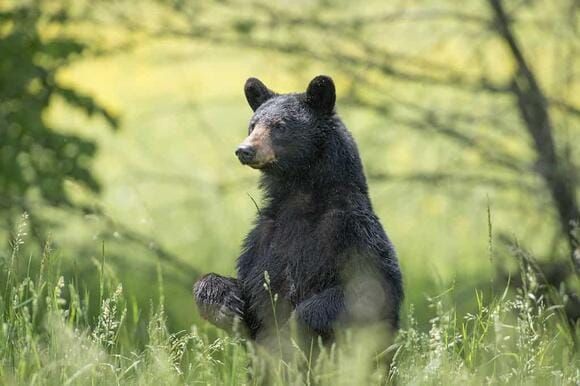
Picture a young bear getting a giant swat from his or her mother. It’s May, she says. You are half grown, a yearling. It’s time for you to go out and find your own food source, and a steady and reliable route to it. The young bear sniffs with its incredibly sense of smell, one of the best in the animal kingdom, and comes up with a burger joint. It could just as easily be someone’s backyard BarBQ, or an overflowing garbage can. Lumbering bears are always looking for food. In Yellowstone, your picnic basket will be confiscated by the rangers in a heartbeat if it is not locked inside your car. Bears are that hungry. But that’s the bear’s story.
Canby is not Yellowstone, but we are surrounded by rivers. Cougars, bears, coyote, bobcat, and so many more animals inhabit The Willamette to the southwest, the Molalla winding north, and the Pudding River to the east. ODFW representative Beth Quillian said recently, “Feeding bears, whether intentional or accidental, can lead to long-term problems, as bad habits often get passed down through generations. Bears have an excellent memory and an incredible sense of smell. Once they find food, even in trash cans, they tend to return, and mother bears teach their cubs to do the same.”
From a bear’s perspective it’s not all bad. “There is often more perceived safety near populations,” says Joe Gustafson who has hunted this area for over 30 years. The animals are not actively hunted to the point that they remember it, he says, and adds that our food density is something they just won’t find in nature. “Predators love the populated areas because we raise food for them.” And that complicates the ecosystem. Our garbage brings in rodents and other small critters, and in addition we have backyard husbandry and agi-tourism. “They love the occasional cat or small pup, sure,” says Gustafson.
Most predators are shy and don’t particularly like our smell. But you don’t want to provoke them. Bears can run at speeds of 30 to 35 miles an hour, and a top sprint for a cougar is 50 miles an hour. “The public plays a critical role in ensuring a safe outcome,” said Interim Police Chief Jose Gonzalez. “By keeping a safe distance and allowing trained professionals to manage the situation, residents help protect both the community and wildlife.” He adds that wildlife sightings should be reported to the non-emergency number for the Candy Police. Whenever possible, the Canby Police coordinates with the ODFW, whose biologists can determine the best approach for all. By all accounts, animals move through an area on their own if we don’t interfere with them. But tracking a bear is not like following your GPS. Bears and wildlife in general do not wear tracking devices. And using a tranquilizer gun requires a license and training, such as the biologists at the ODFW would have. Otherwise, it’s against the law to use a tranquilizer gun.
Why none of those precautions took place in Canby recently is up for hot debate, but it might have been the nature of the bear, a small yearling who, by all accounts, waited for the light at the crosswalk and made an appearance at Burgerville. It was love at first sight. People wanted a close up bear encounter, which is never a good idea. Plenty of us are guilty of watching the videos. Some people even nicknamed the bear. Interim Police Chief Jose Gonzalez cautions us to “give the animal an escape route.” Further advice is well worth heeding: “Do not approach it or attempt to take photos from a close distance. Keep children and pets indoors or under close control. Pets can provoke wildlife and increase the risk of encounter.”
Is it all worth it, living around wildlife and needing to be their stewards while they raid our garbage and occasionally make off with our pets? Joe Gustafson recalls agate hunting at the confluence of the Molalla and Pudding Rivers a while back. “I heard river rocks against hooves, which makes a slightly glassy sound like shale rock being walked on. Suddenly, and at a very close distance, a buck blacktail, antlers in full velvet, cautiously approached me as I hunkered down, seeing how close he would come. When he decided I was bad news, he burst from his statue-like pose, jumped in the river, and swam across. He then climbed up the far bank and disappeared,” he recalled. But the encounter was not over.
"How cool was that? I was thinking. I hear commotion from where he disappeared into the tree line. He comes flying back out, a coyote hot on his heels. This experience illustrated something important about deer to me. They don't always know the safest places to be.”
Quillian of the ODFW says the department’s favorite stories are ones in which communities adjust to the presence of wildlife, such as when the Mt. Hood Community started using bear-resistant garbage cans, and vacation rental companies began including bear safety information in property welcome packets. As a result, issues with bears getting into garbage decreased significantly. “Issues still crop up occasionally,” she says.